


✲ NASA COMPETITION ✲ BUILT
✲ ADOBE INTERNSHIP
Crafting AI-Driven Control Systems for NASA Rover Exploration.
Crafting AI-Driven Control Systems for NASA Rover Exploration.
MY ROLE
MY ROLE
As the UX design lead on 1 of 11 NASA selected teams, I executed end-to-end design and helped with project strategy, feature prioritization, and user testing strategy.
As the UX design lead on 1 of 11 NASA selected teams, I executed end-to-end design and helped with project strategy, feature prioritization, and user testing strategy.
TOOLS
Figma
Cursor
Jitter (motion)
TEAM
TEAM
1 Project Manager
1 Project Manager
8 Developers
8 Developers
2 UX Researchers
2 UX Researchers
TIMELINE
TIMELINE
January - May 2026
January - May 2026
✲ OUR BRIEF
✲ OUR BRIEF
✲ OUR BRIEF
Design a System for High-Stakes Lunar Missions.
Design a System for High-Stakes Lunar Missions.
The Problem:
The Problem:
My challenge was to design for a massive stream of data while accounting for the unique constraints of a lunar mission. Our goal was to turn a passive cockpit into a smart partner that tracks both the rover’s health and the external crew’s safety in real-time to minimize driver cognitive load.
My challenge was to design for a massive stream of data while accounting for the unique constraints of a lunar mission. Our goal was to turn a passive cockpit into a smart partner that tracks both the rover’s health and the external crew’s safety in real-time to minimize driver cognitive load.
Solution Preview
Final Design Preview →
✲ RESEARCH
✲ RESEARCH
✲ RESEARCH
Exploring the data astronauts need to stay safe and focused during lunar missions.
Exploring the data astronauts need to stay safe and focused during lunar missions.
Research Strategy
CHALLENGE
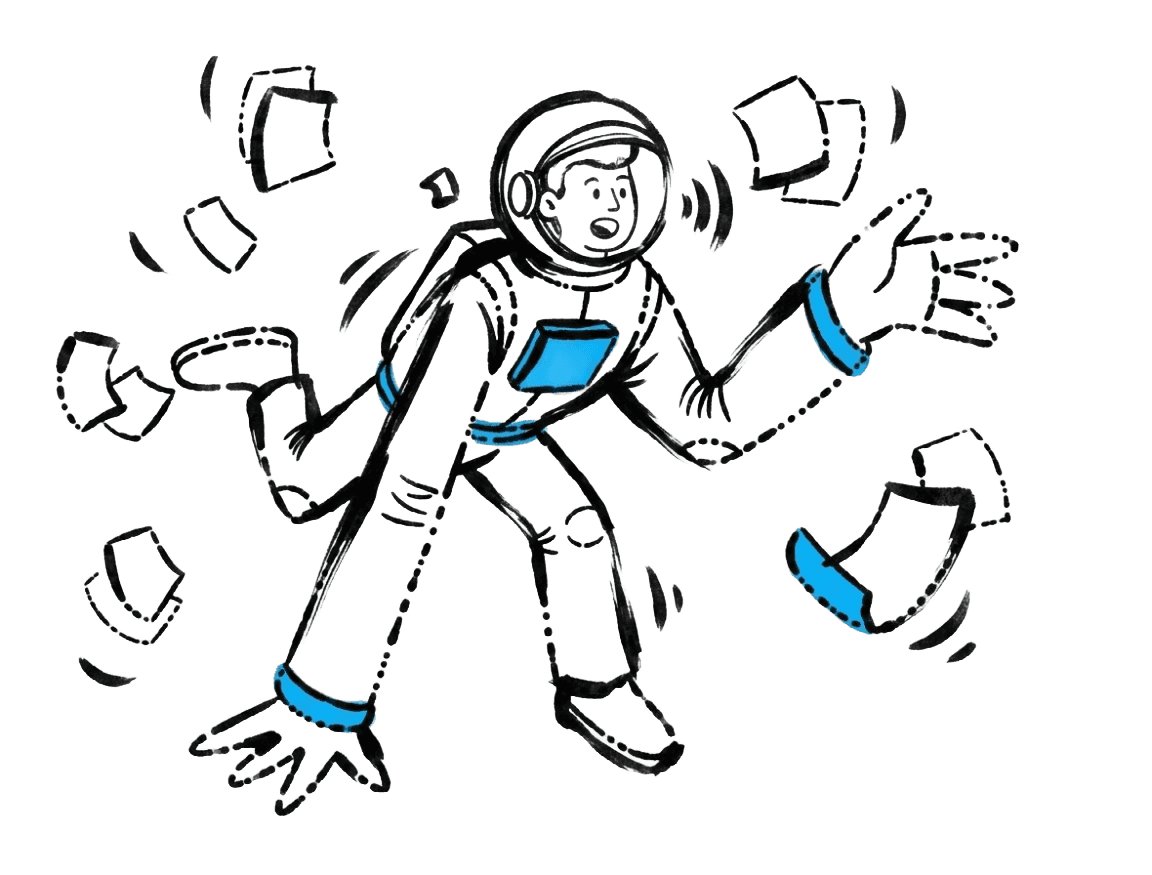
We couldn't get input from our target users (astronauts) until test week at the end of the project.
SOLUTION
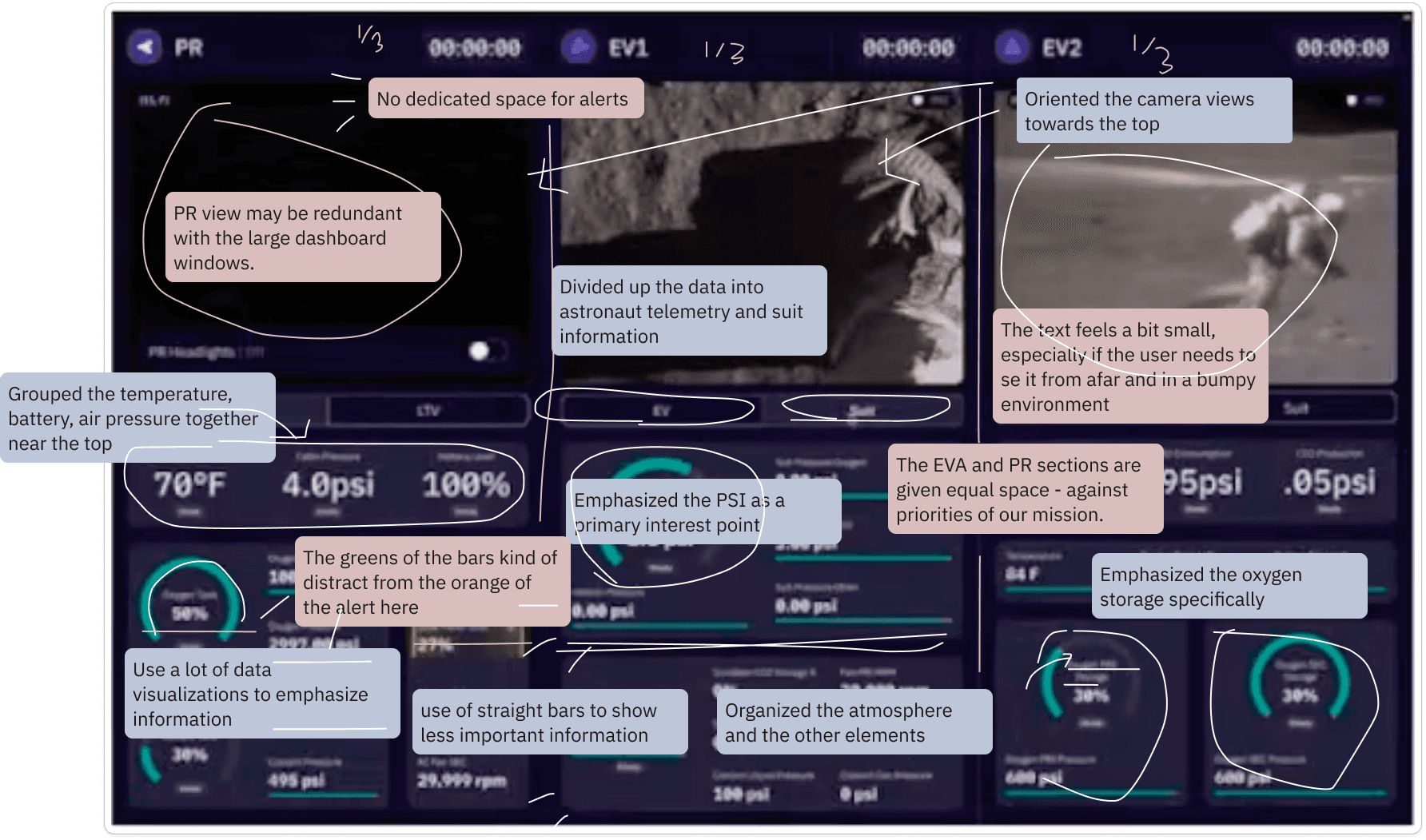
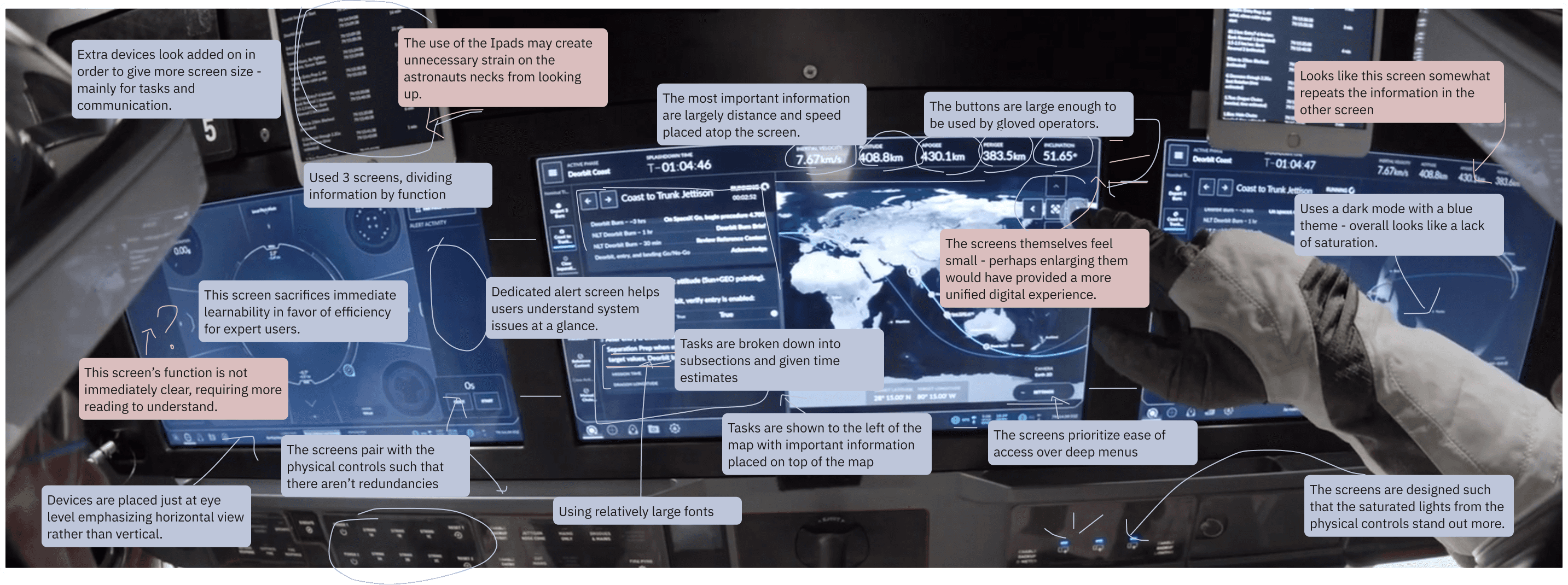
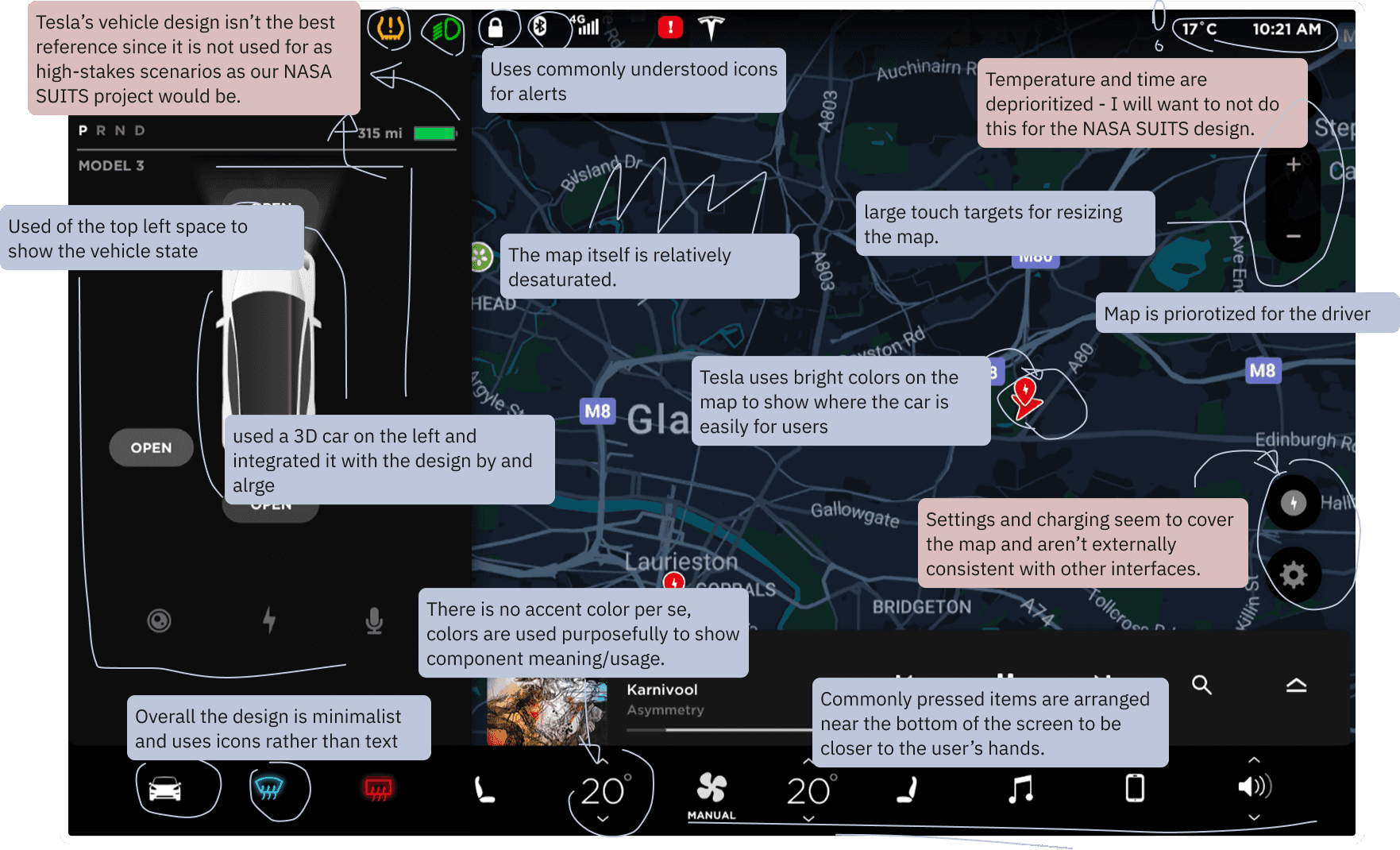
I relied on secondary research, design patterns and NASA mentor input.

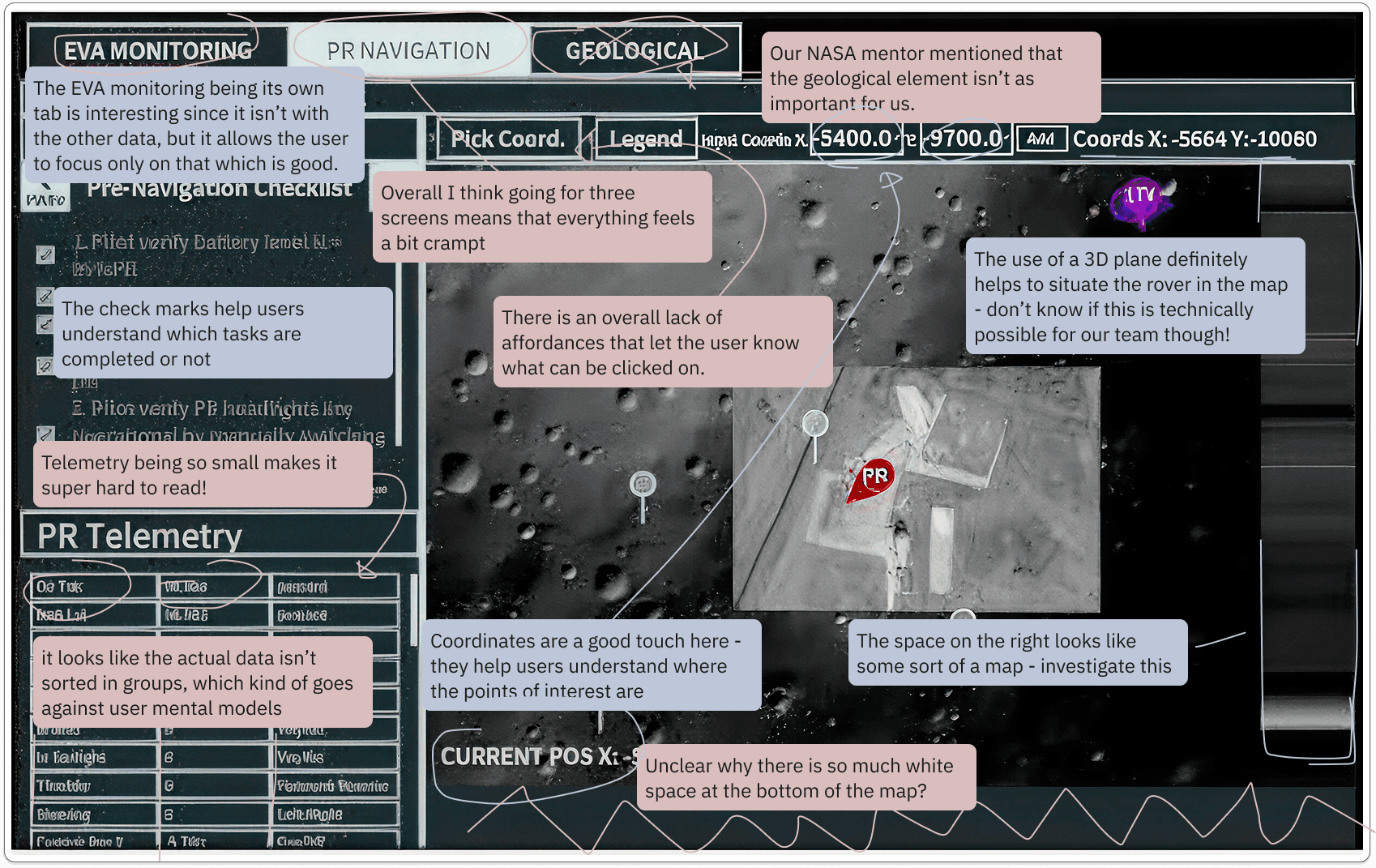
Learning About High Stakes Design Patterns
Learning About High Stakes Design Patterns
Investigating high-stakes interfaces helped me understand how to balance the low density at-a-glance needs of drivers with the nuance needed to monitor life-critical vitals all in one system.
Investigating high-stakes interfaces helped me understand how to balance the low density at-a-glance needs of drivers with the nuance needed to monitor life-critical vitals all in one system.
Organizing System Inputs by Prioritizing Functional Data.
Organizing System Inputs by Prioritizing Functional Data.
Through conversations with NASA mentors and research into relevant data types, I learned to prioritize functional information like rover speed over raw data like oxygen levels.
Through conversations with NASA mentors and research into relevant data types, I learned to prioritize functional information like rover speed over raw data like oxygen levels.

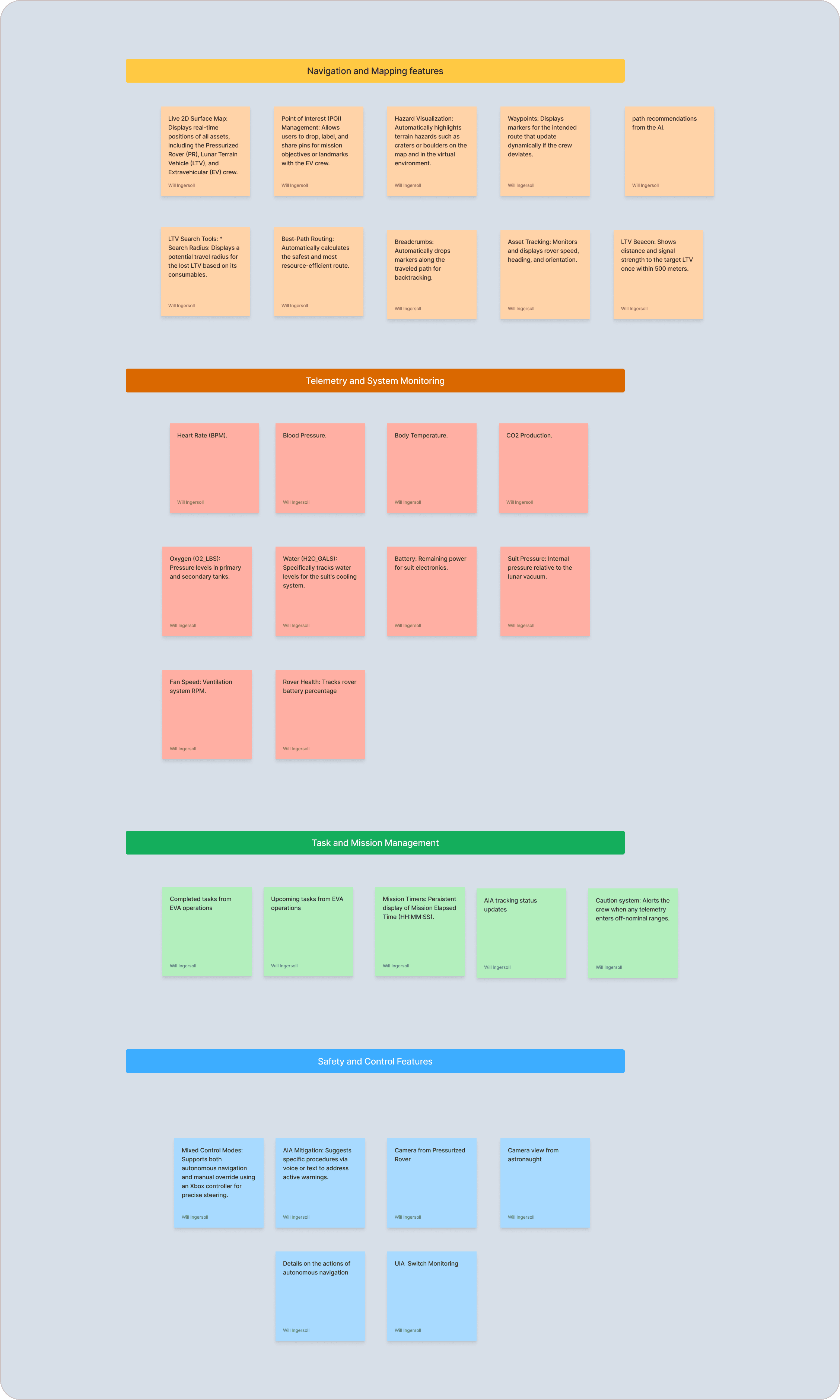

All required features/data
Features/data sorted by category
Features/data prioritized by frequency of use and importance

How might we ensure life-critical vitals always command attention without distracting from the mission at hand?
Our Direction →
Our Direction →
How might we ensure life-critical vitals always command attention without distracting from the mission at hand?
The Goals
Design a system that ensures drivers are aware of life-critical data without distracting from navigation tasks.
Craft an intuitive system that absorbs some of the tasks during high-stakes missions.
✲ PLANNING AND ITERATION
✲ PLANNING AND ITERATION
✲ PLANNING AND ITERATION
Translating NASA Specifications into a Robust and Adaptive System.
Translating NASA Specifications into a Robust and Adaptive System.
Deciding System Form
Deciding System Form
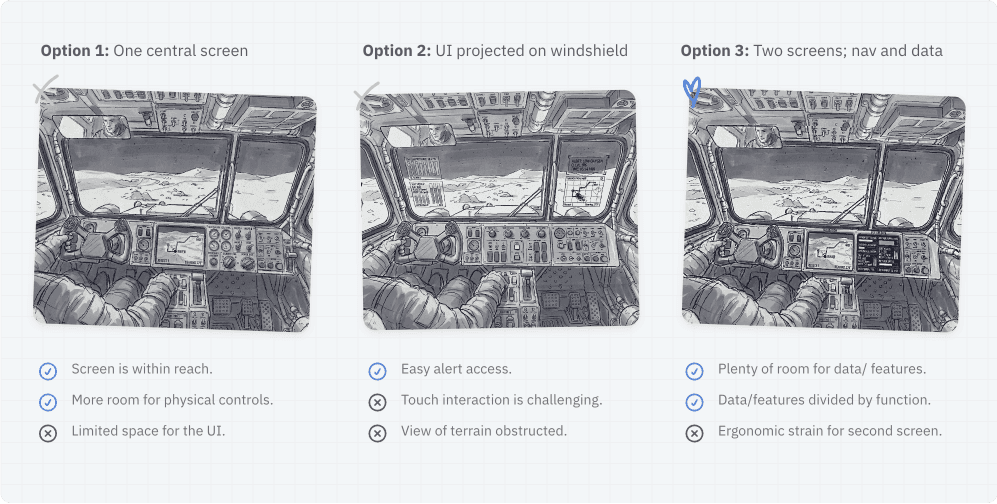
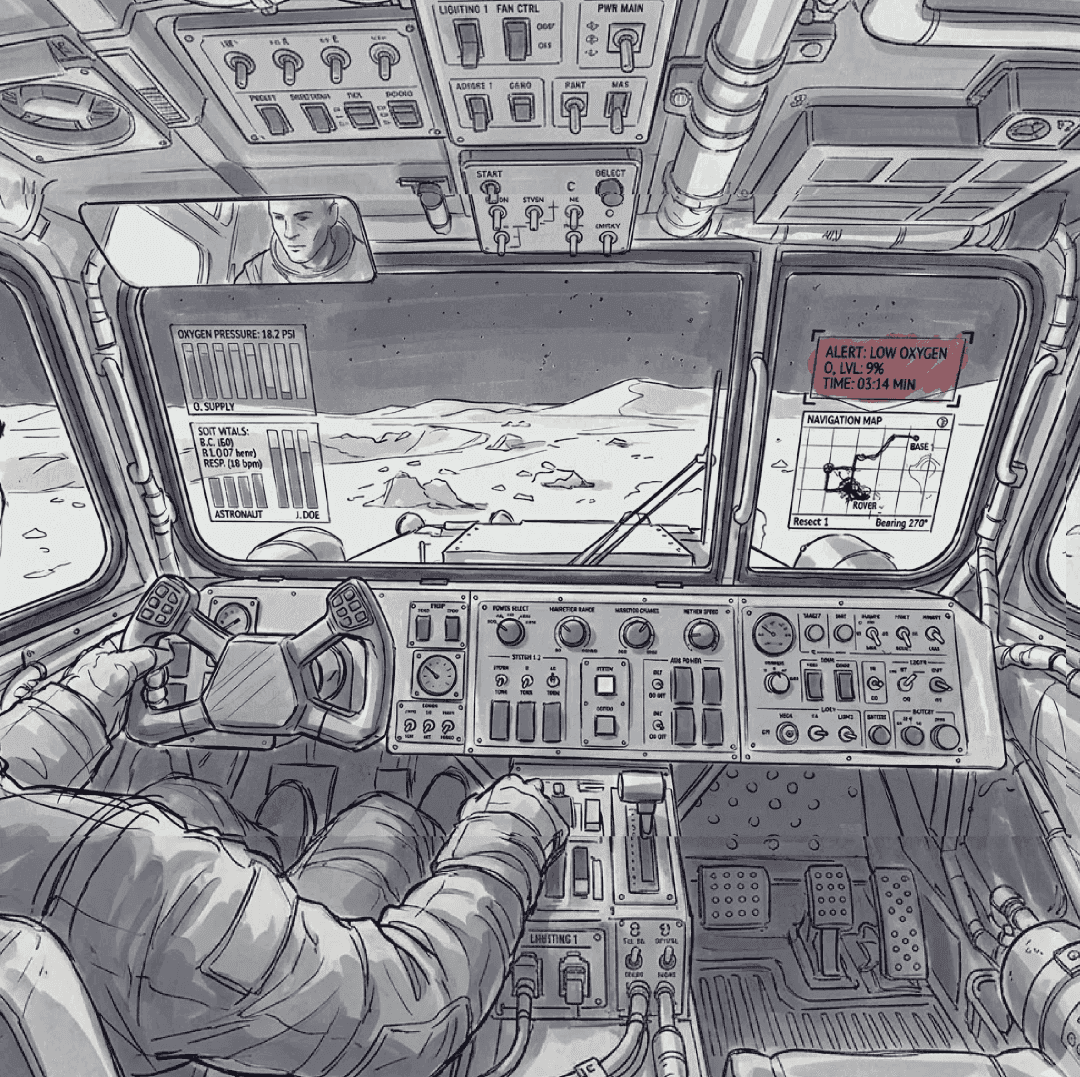
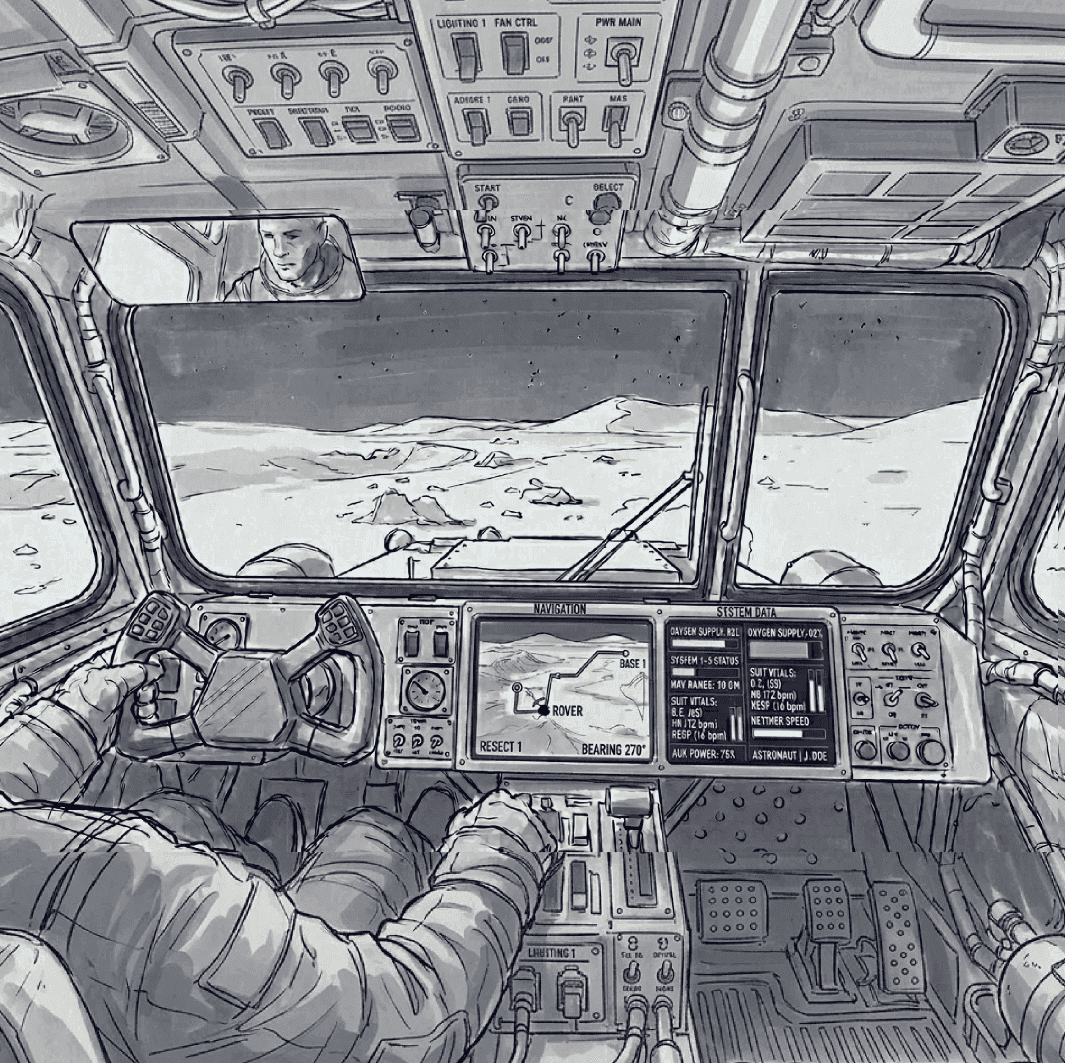
Option 1: One central screen
Option 2: UI projected on windshield
Option 3: Two screens; nav and data
Screen is within reach.
More room for physical controls.
Limited space for the UI.
Easy alert access.
Touch interaction is challenging.
View of terrain obstructed.
Plenty of room for data/ features.
Data/features divided by function.
Ergonomic strain for second screen.
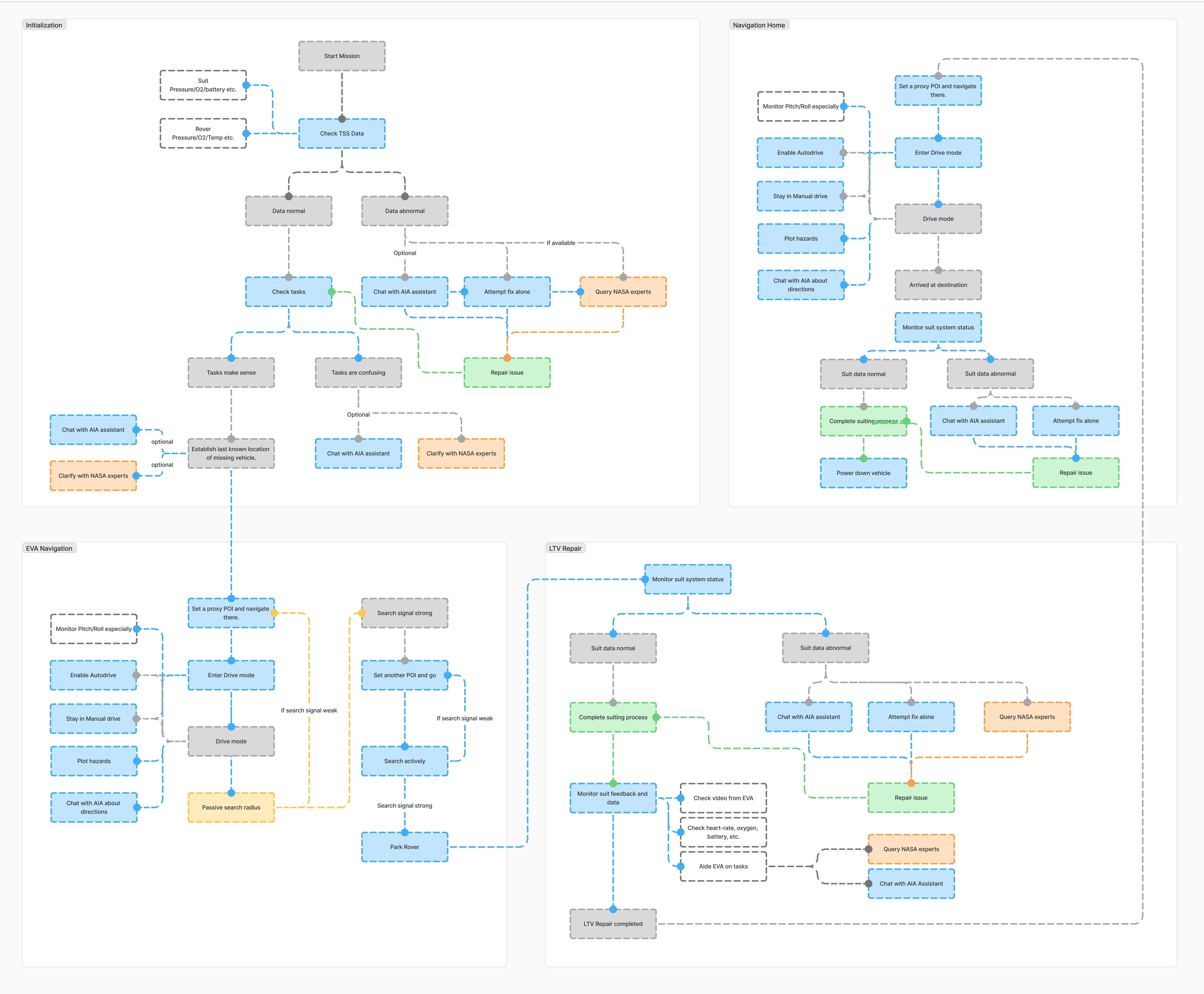
Leveraging AI for Ambiguous Driver Tasks.
Defining Logic & AI Integration →
Mapping the crew's complex procedures highlighted where the AI assistant could help. I prioritized leveraging the AI assistant for mainly monitoring and mission-planning tasks.
Wire-frames to Hi-fis
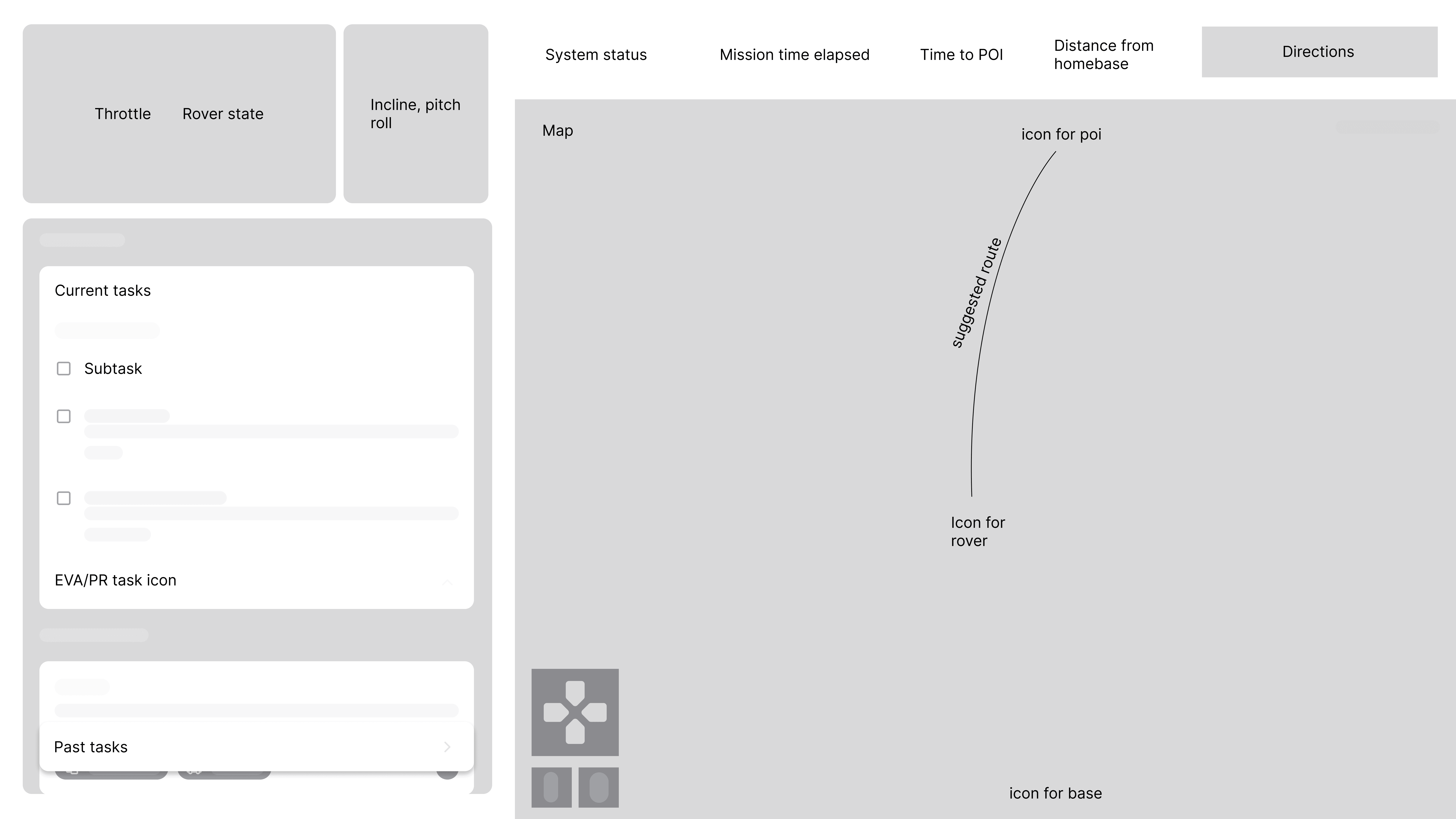
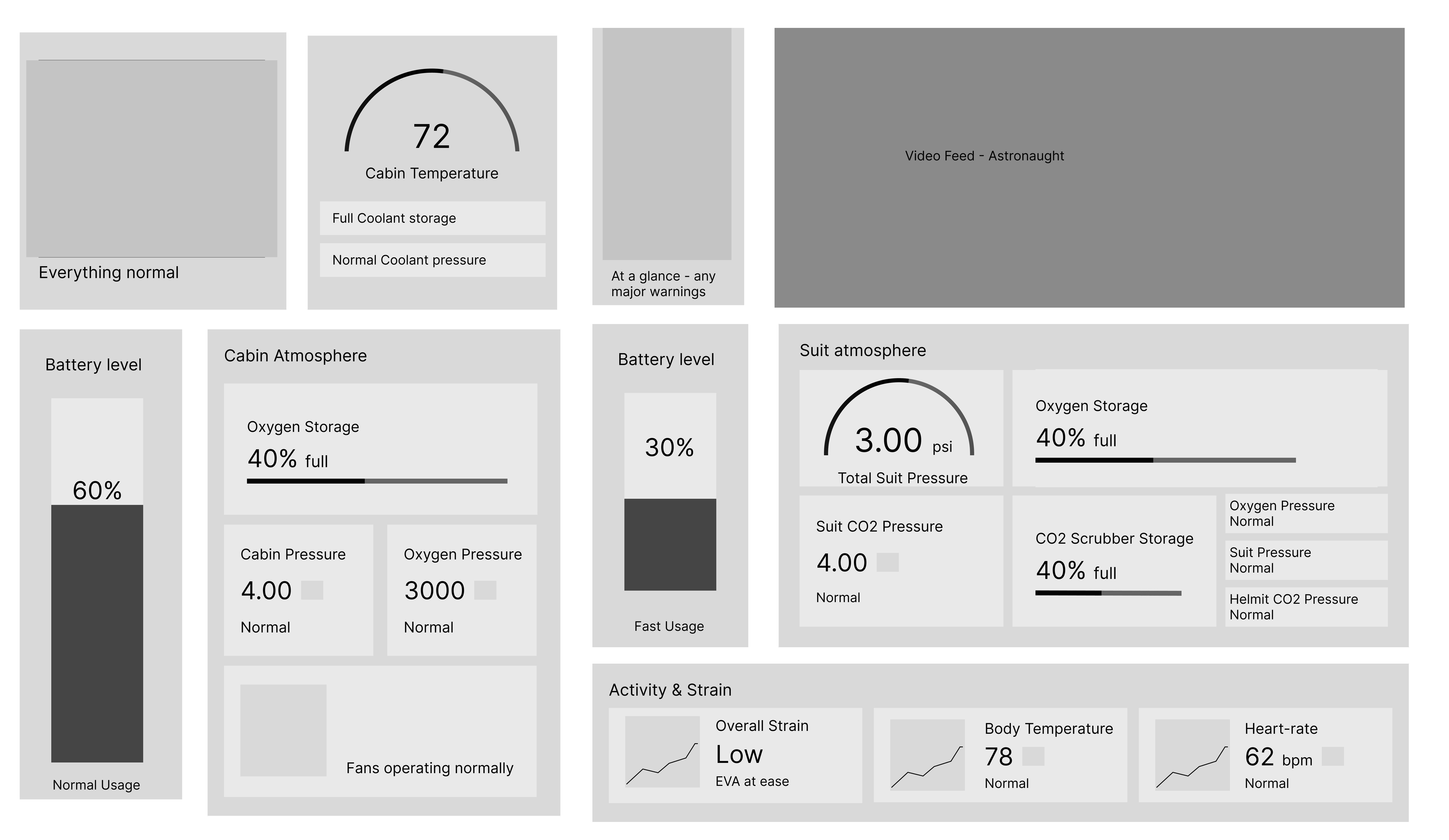
See Iteration
✲ KEY DESIGN DECISIONS
✲ KEY DESIGN DECISIONS
Limiting cognitive load with color scheme and AI design.
Limiting cognitive load with color scheme and AI design.
#29292C
Background
Card background
#3A3A41
Danger
Warning
Safe
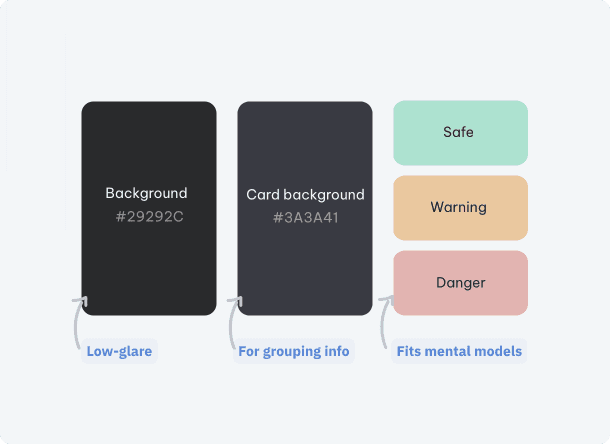
Low-glare
For grouping info
Fits mental models
Designing for Glare and Alert Visibility
I designed for dark mode to limit the increased solar glare on the moon and reserved saturated colors for coding data states to ensure alert visibility.
Cursor prototype for the AI assistant
Designing a Context-Aware AI Assistant
I considered the main use cases of the AI assistant, implementing suggested common actions and accounting for error states prototyped with Cursor.
✲ USER TESTING
✲ USER TESTING
✲ USER TESTING
Testing on 68 students and at NASA.
Testing on 68 students and at NASA.
Testing on 68 users
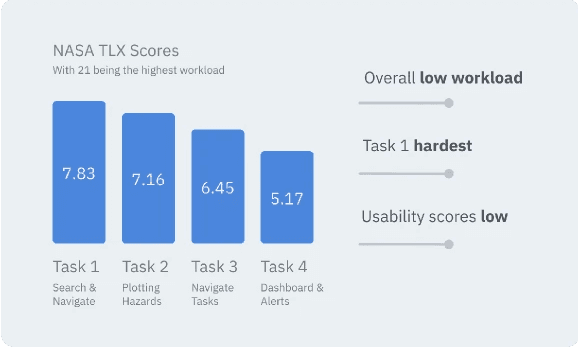
Testing Results & Procedure
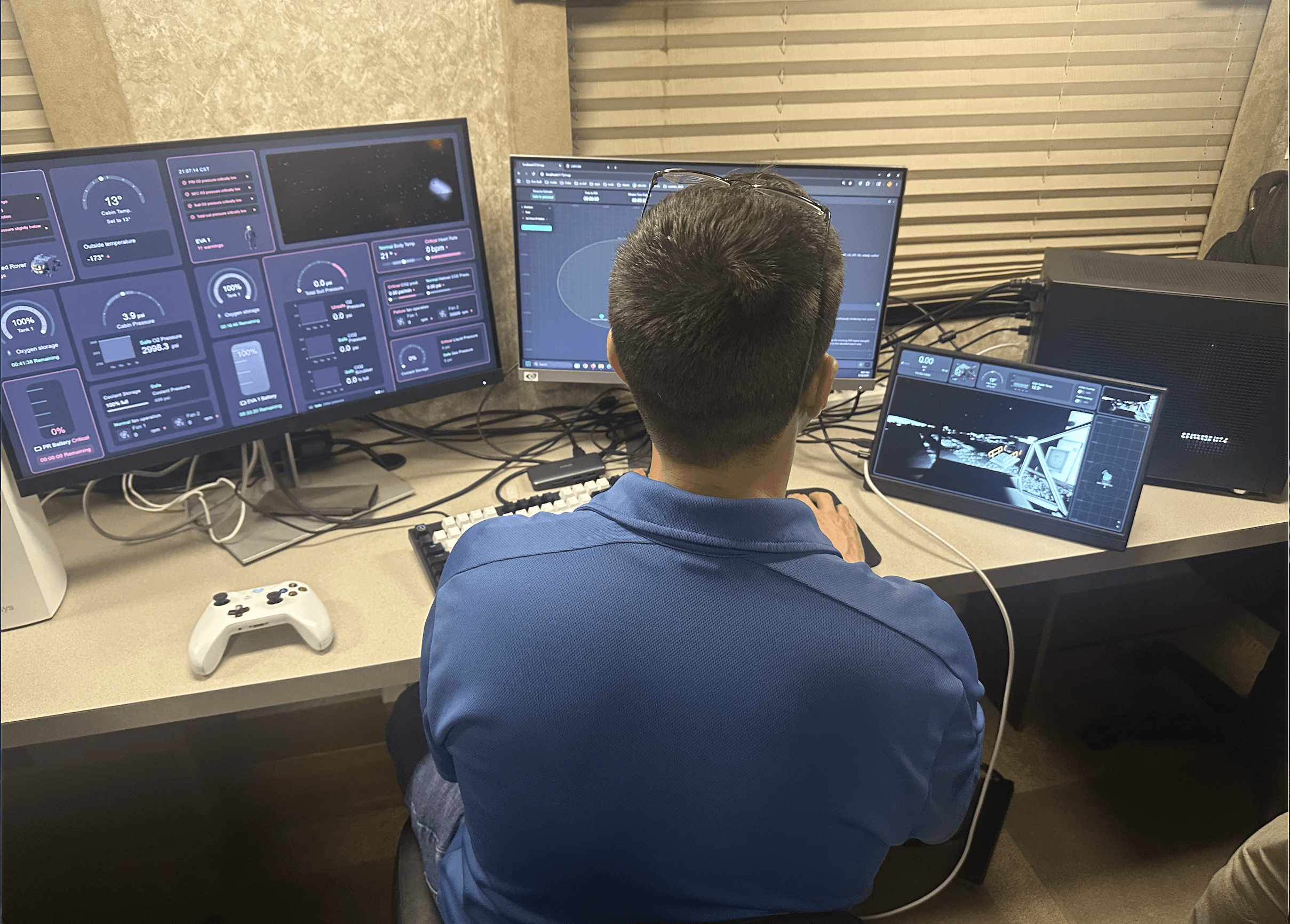
NASA engineer feedback.
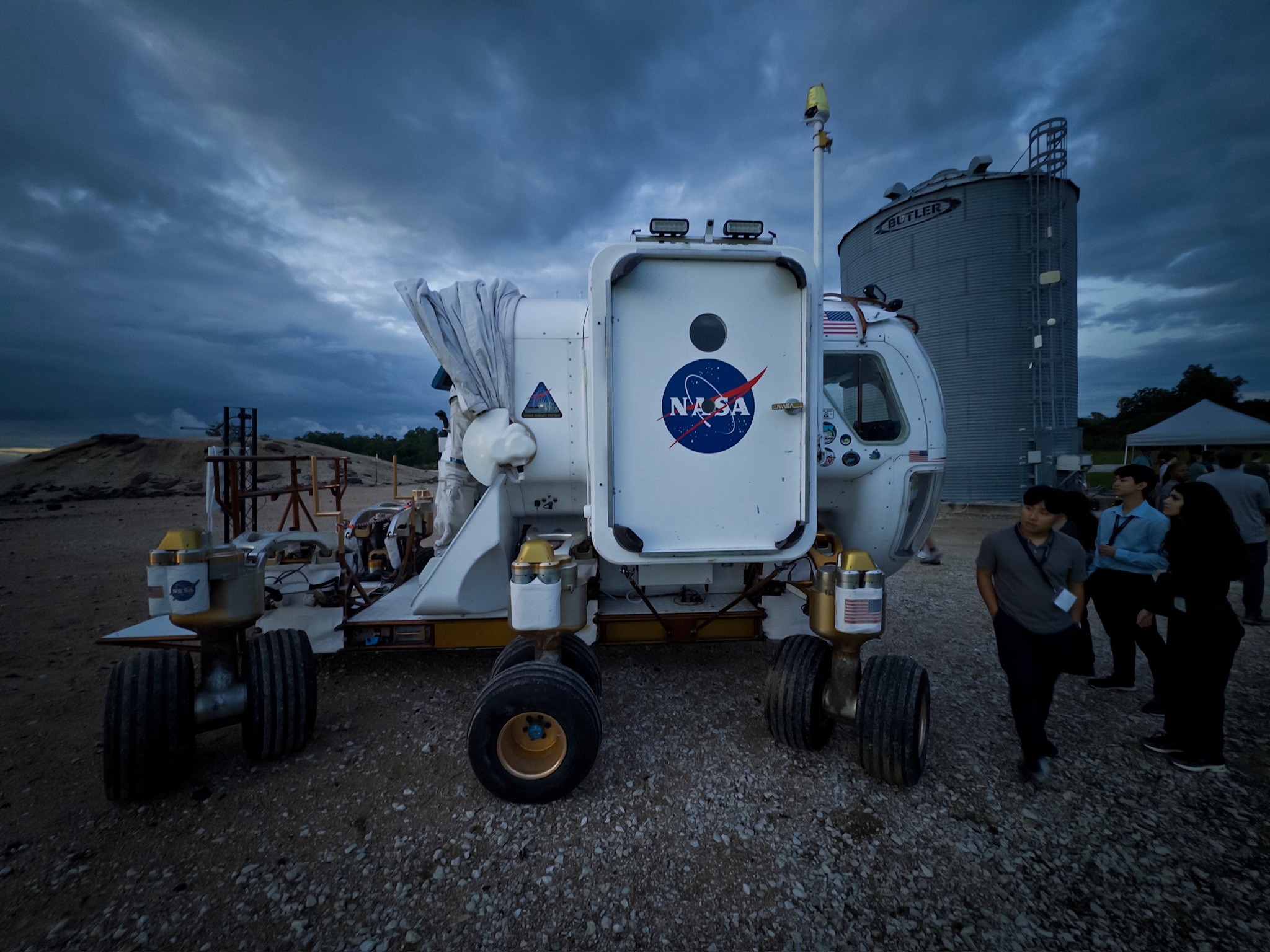
Experiencing the real rover.
Testing at the Johnson Space Center.
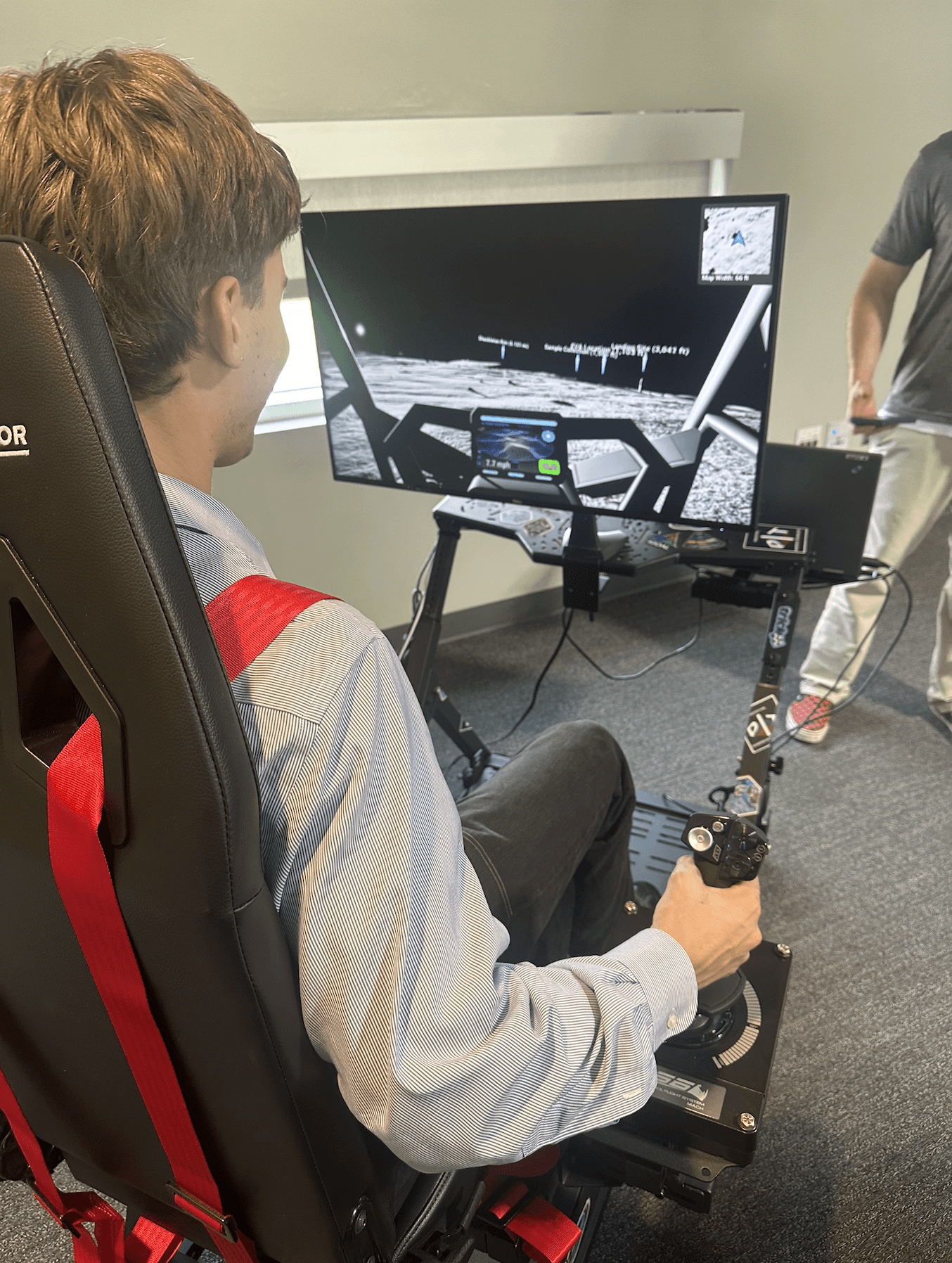
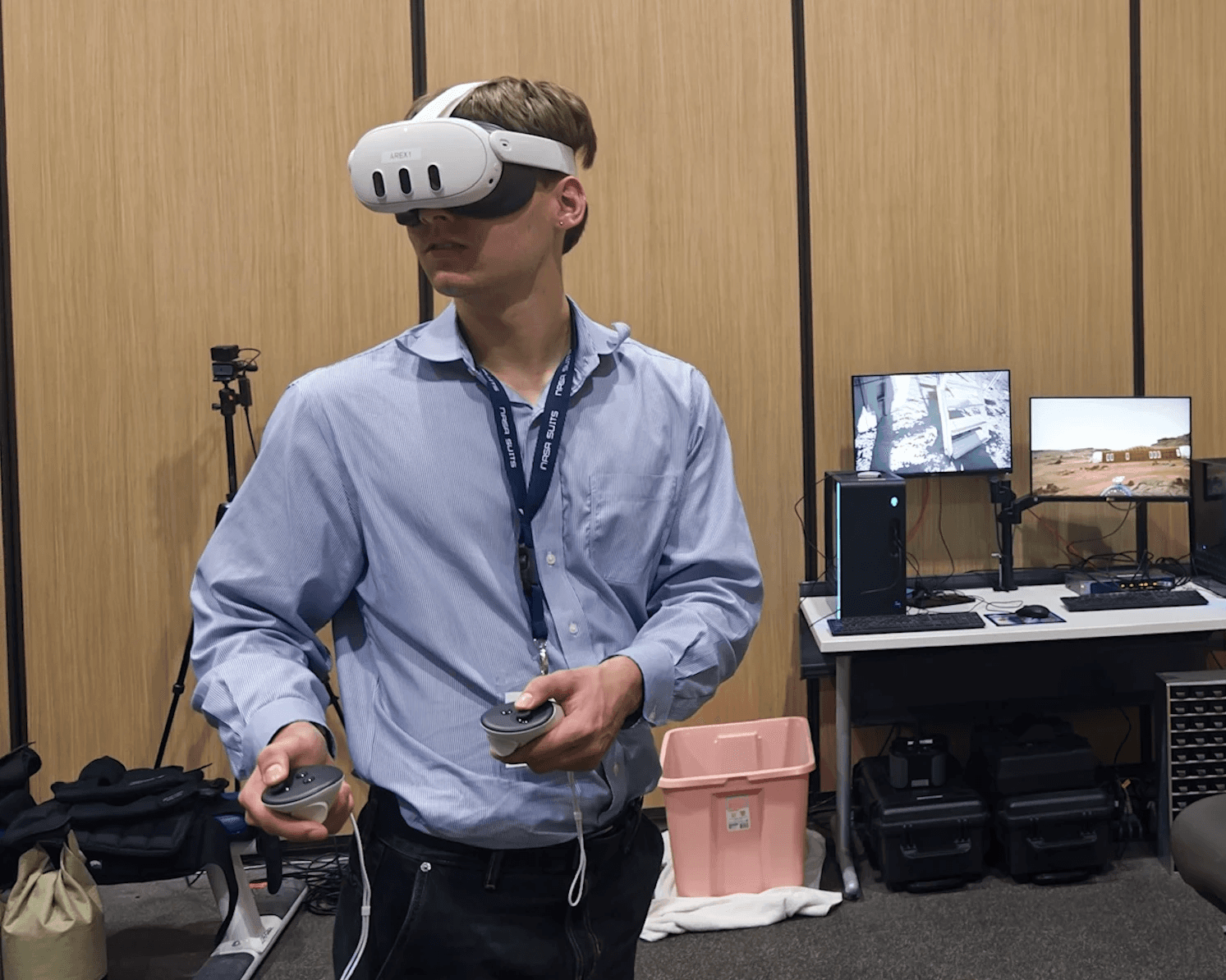
Stepping into the user's shoes.
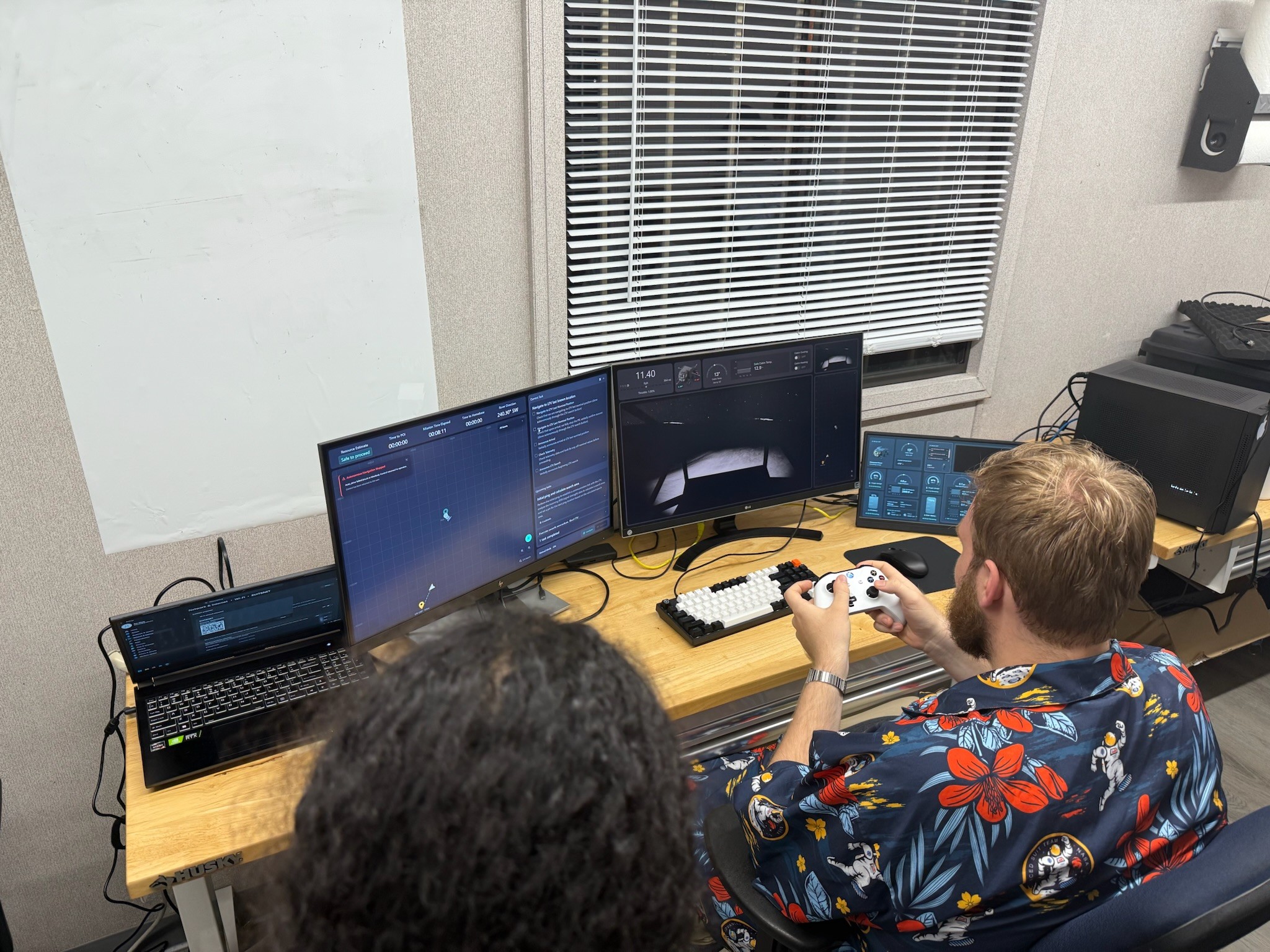
NASA designer feedback.
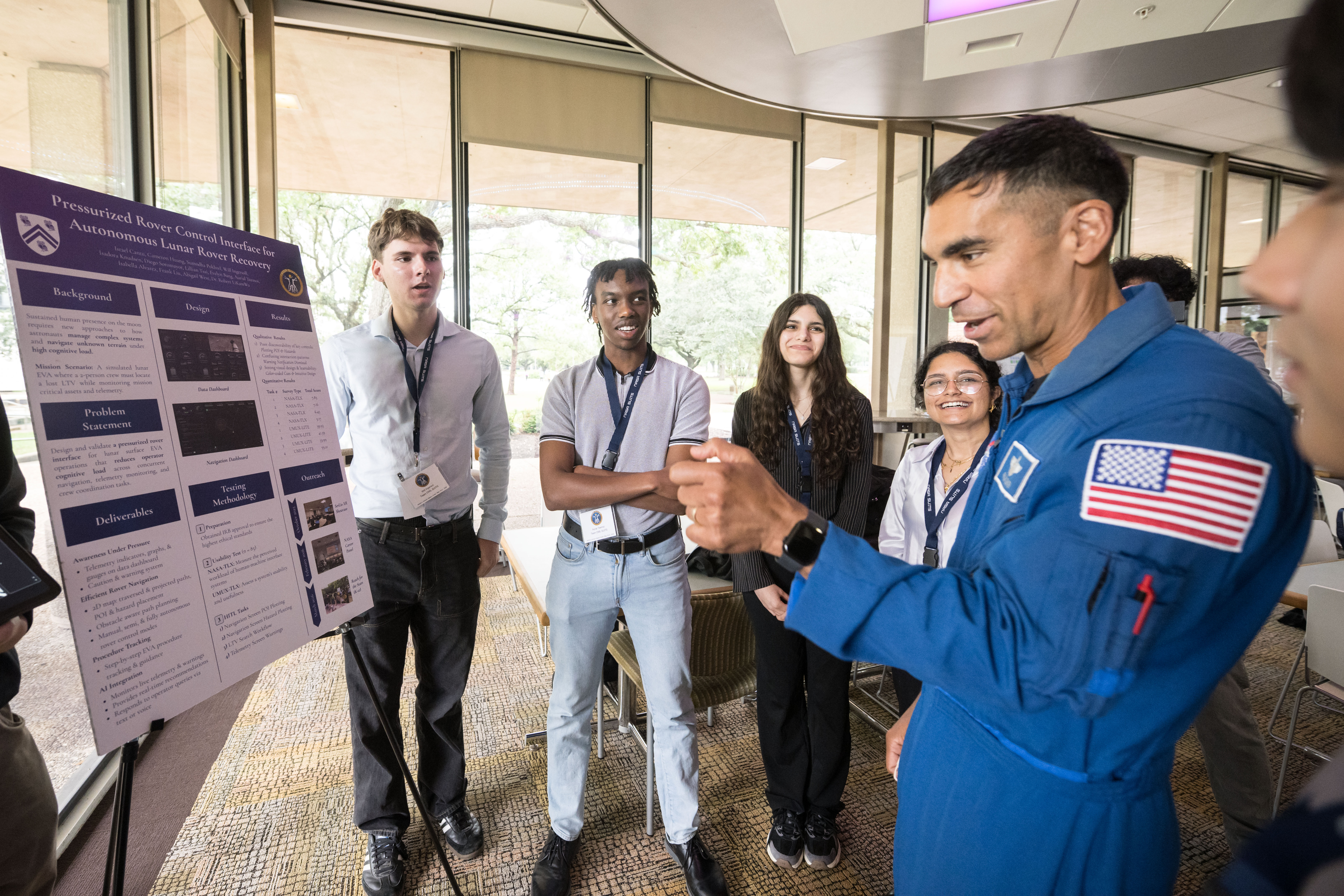
Astronaut feedback.
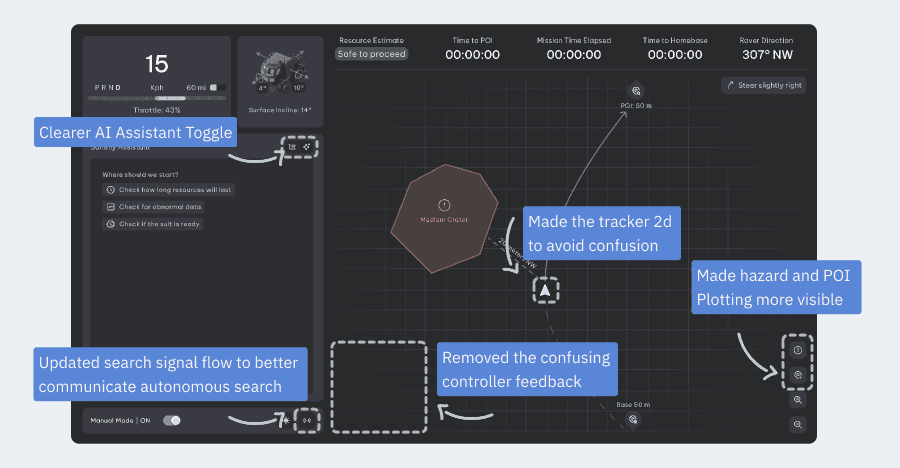
Adapting to Feedback
Adapting to Feedback
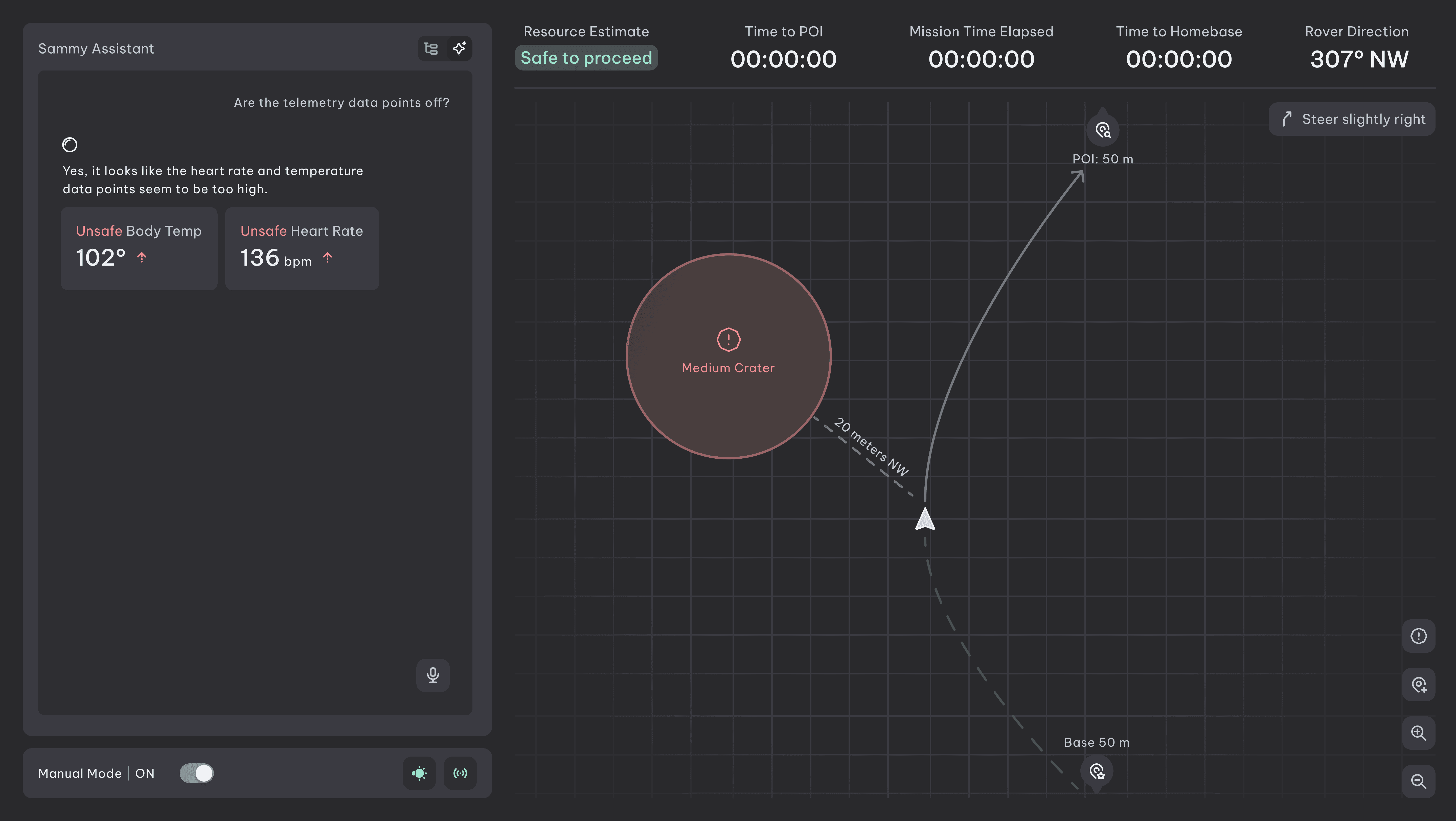
Made hazard and POI Plotting more visible
Made the tracker 2d to avoid confusion
Removed the confusing controller feedback
Updated search signal flow to better communicate autonomous search
Moved speed, throttle and roll/pitch closer to windshield
Made hazards circular instead of polygonal for easier plotting.
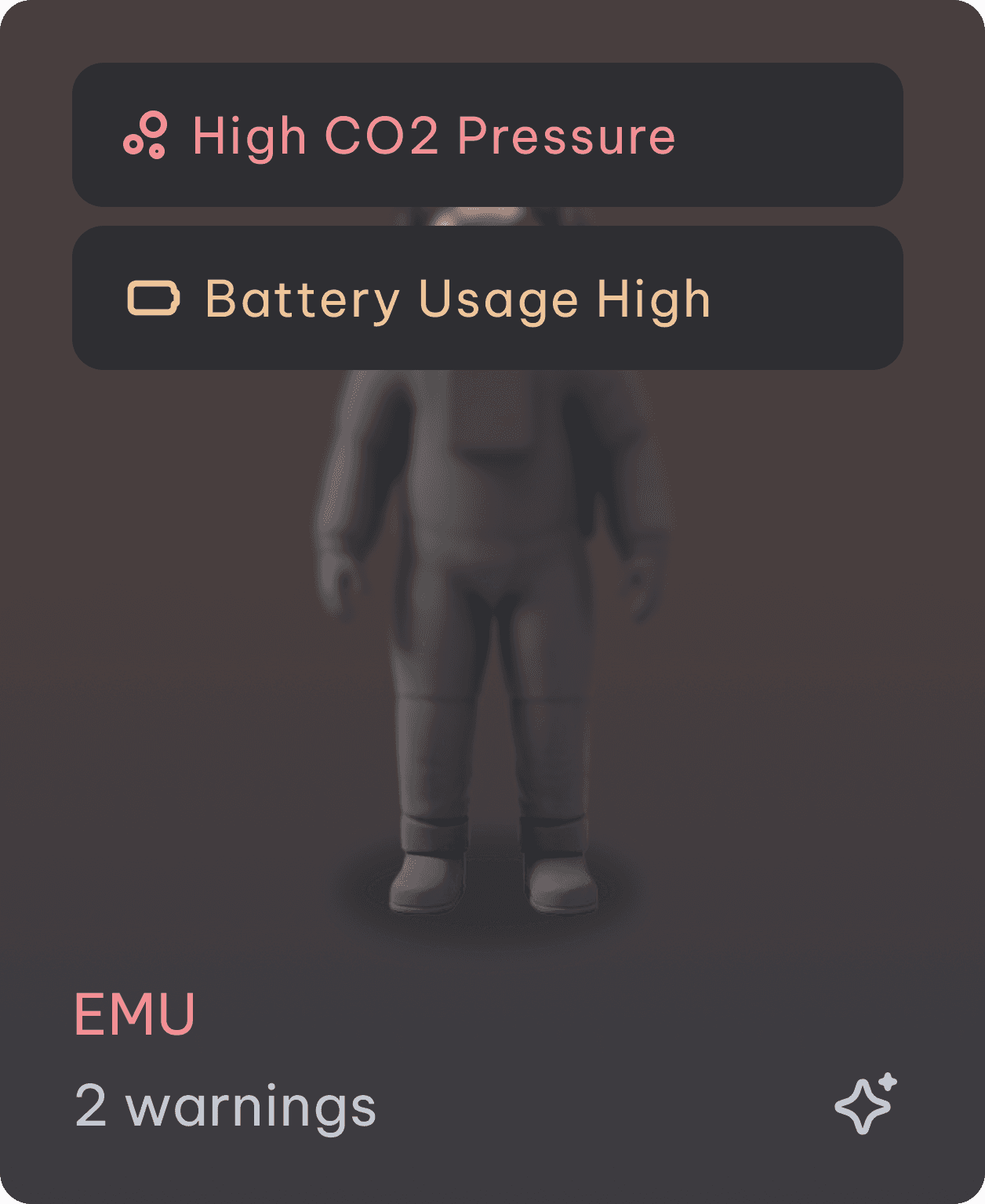
Removed x's from medium alerts
Adjusted the warning boundaries to reduce warning fatigue
Added an AI assistant to the data screen
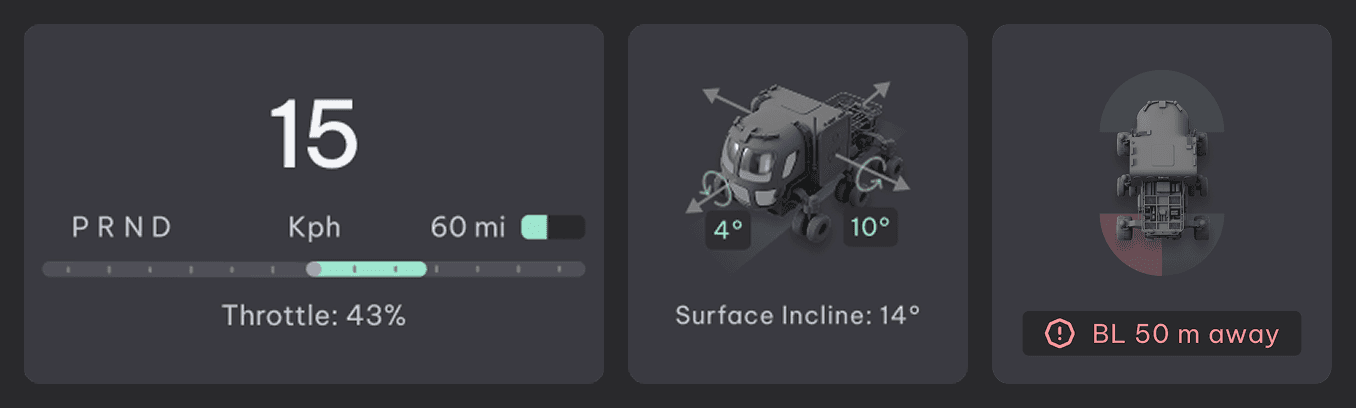
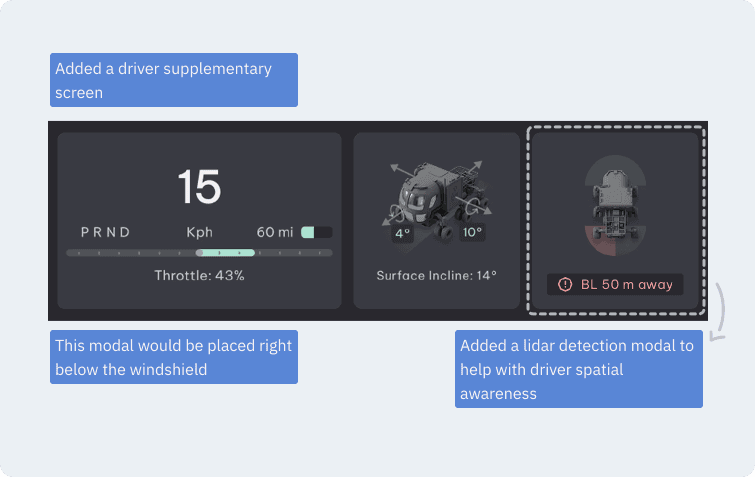
Added a driver supplementary screen
Added a lidar detection modal to help with driver spatial awareness
This modal would be placed right below the windshield


✲ SOLUTION
A comprehensive navigation and data system for busy drivers.
*This mockup environment was partially generated with AI
AI Assisted Navigation and Task Management
AI Assisted Navigation and Task Management
The final AI-assistant guides users through complex tasks and fluidly handles actions like point-of-interest navigation. This flow robustly accommodates every user need with strong visual feedback.
The final AI-assistant guides users through complex tasks and fluidly handles actions like point-of-interest navigation. This flow robustly accommodates every user need with strong visual feedback.
1
Intelligent Alerts, Data and Trends
Intelligent Alerts, Data and Trends
The final system surfaces critical alerts on the main navigation screen to save users' cognitive resources for the mission. For deeper analysis, users can instantly switch to a comprehensive data screen featuring advanced trends, visualizations, and metrics.
The final system surfaces critical alerts on the main navigation screen to save users' cognitive resources for the mission. For deeper analysis, users can instantly switch to a comprehensive data screen featuring advanced trends, visualizations, and metrics.
2
2
Other Key Features
Spacesuit Integration
The system allows drivers to monitor spacesuits out on a mission to ensure safety.

Voice Activation
Drivers can easily activate the system with just their voice to keep their hands on the driving wheel and their attention on the terrain.


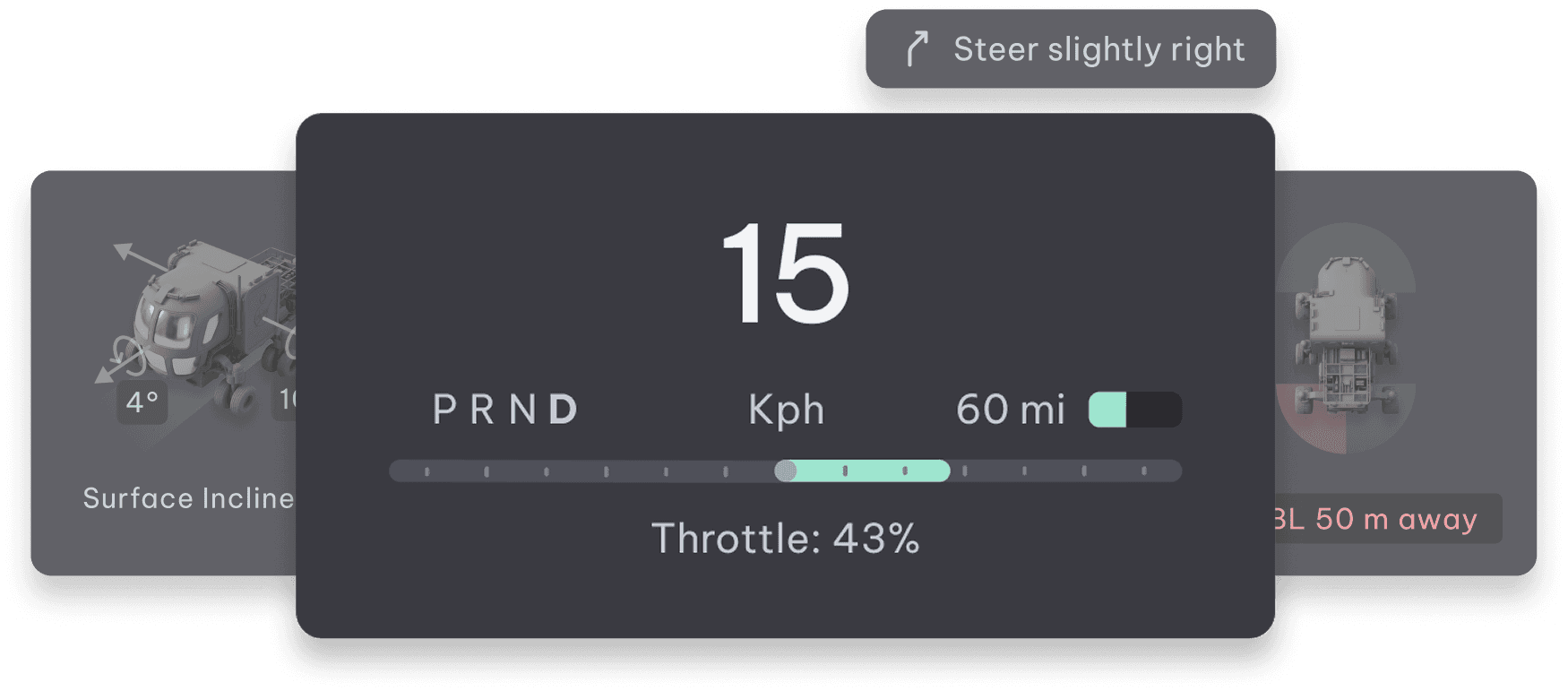
Prioritized Driver Information
The most important information for driving is prioritized near the driver's view.
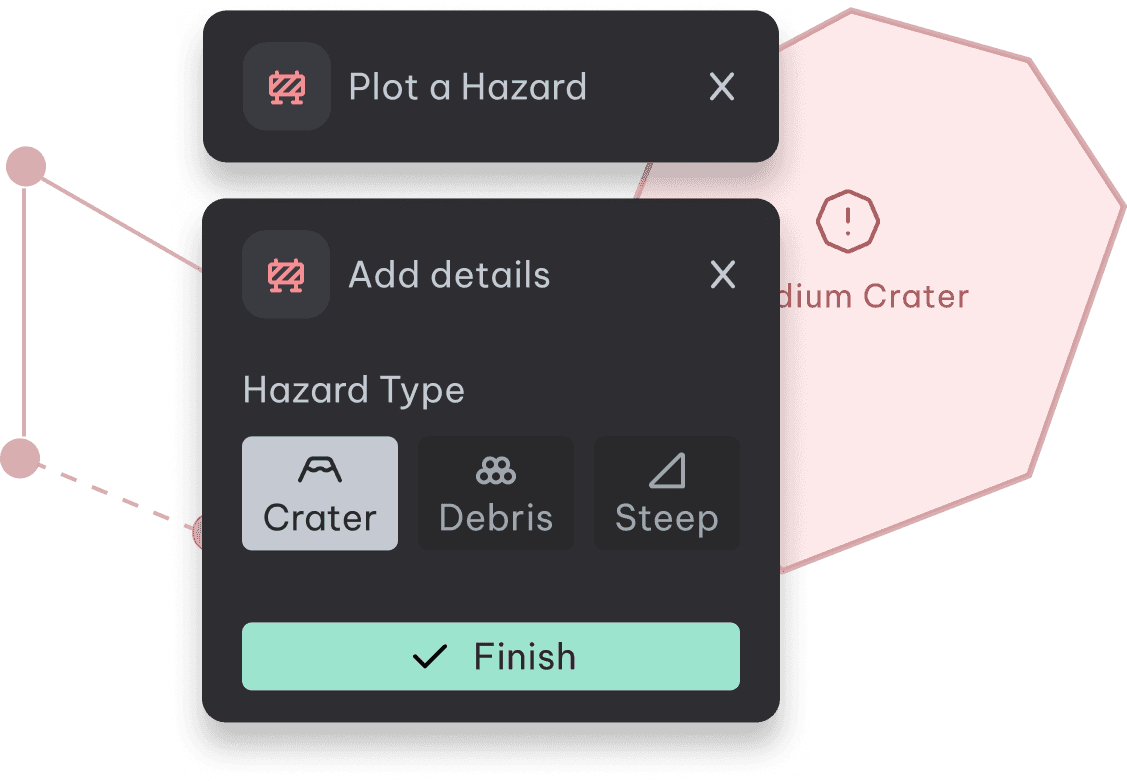
Hazard Mapping
Astronauts can plot hazards and points of interest easily by pressing and holding on the map.
SOLUTION
A comprehensive navigation and data system for busy drivers.

SOLUTION
A comprehensive navigation and data system for busy drivers.
SOLUTION
A comprehensive navigation and data system for busy drivers.
The Results
The Results
Designed by the competition’s smallest design team, our system successfully met all NASA specifications.
Achieved a 6.6/21 NASA-TLX score in initial user testing, with further improvements expected from recent iterations.
Received positive feedback from reviewers and astronauts, who noted excellent usability and zero safety-critical issues.
Designed by the competition’s smallest design team, our system successfully met all NASA specifications.
Designed by the competition’s smallest design team, our system successfully met all NASA specifications.
Designed by the competition’s smallest design team, our system successfully met all NASA specifications.

SOLUTION
A comprehensive navigation and data system for busy drivers.


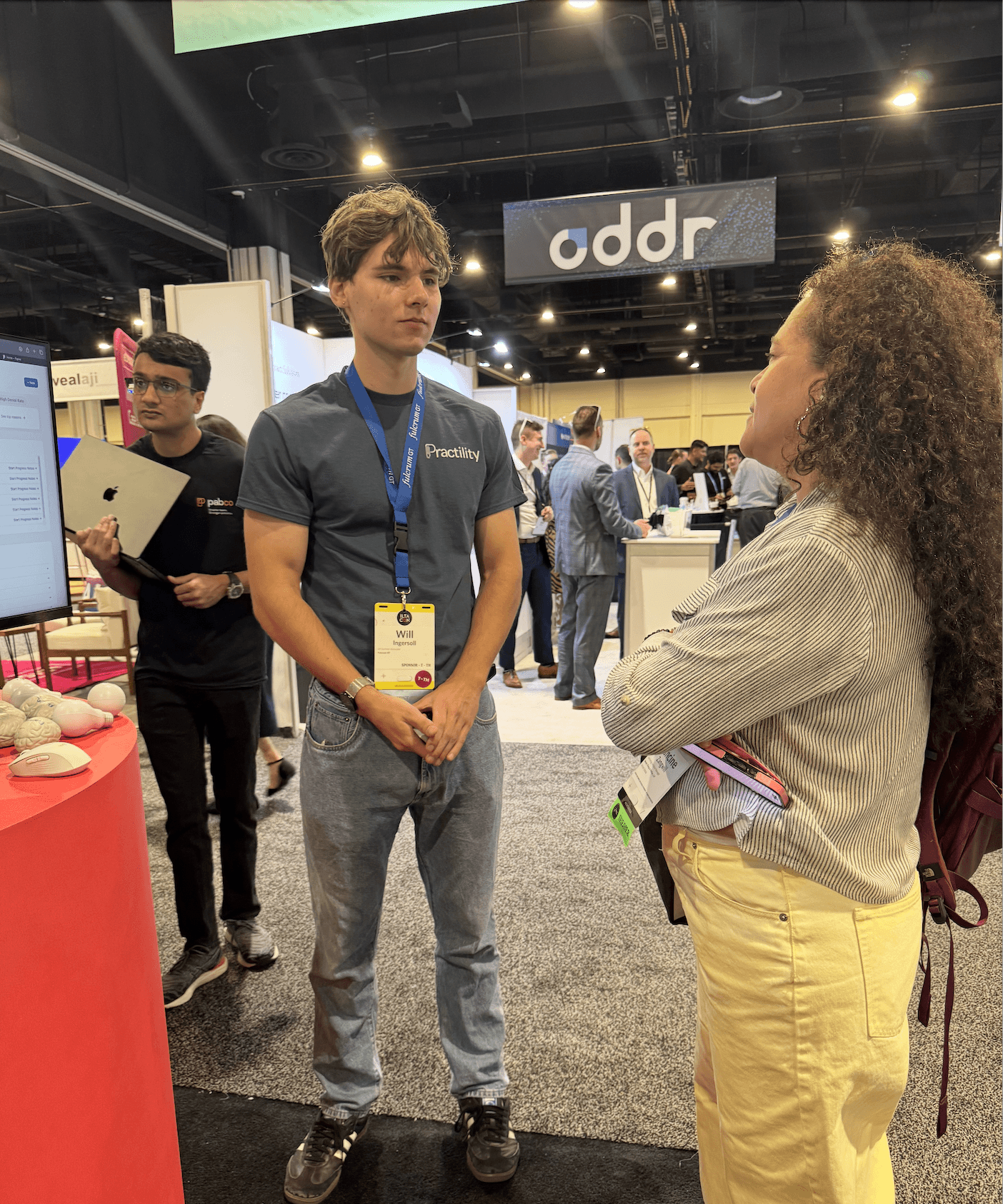

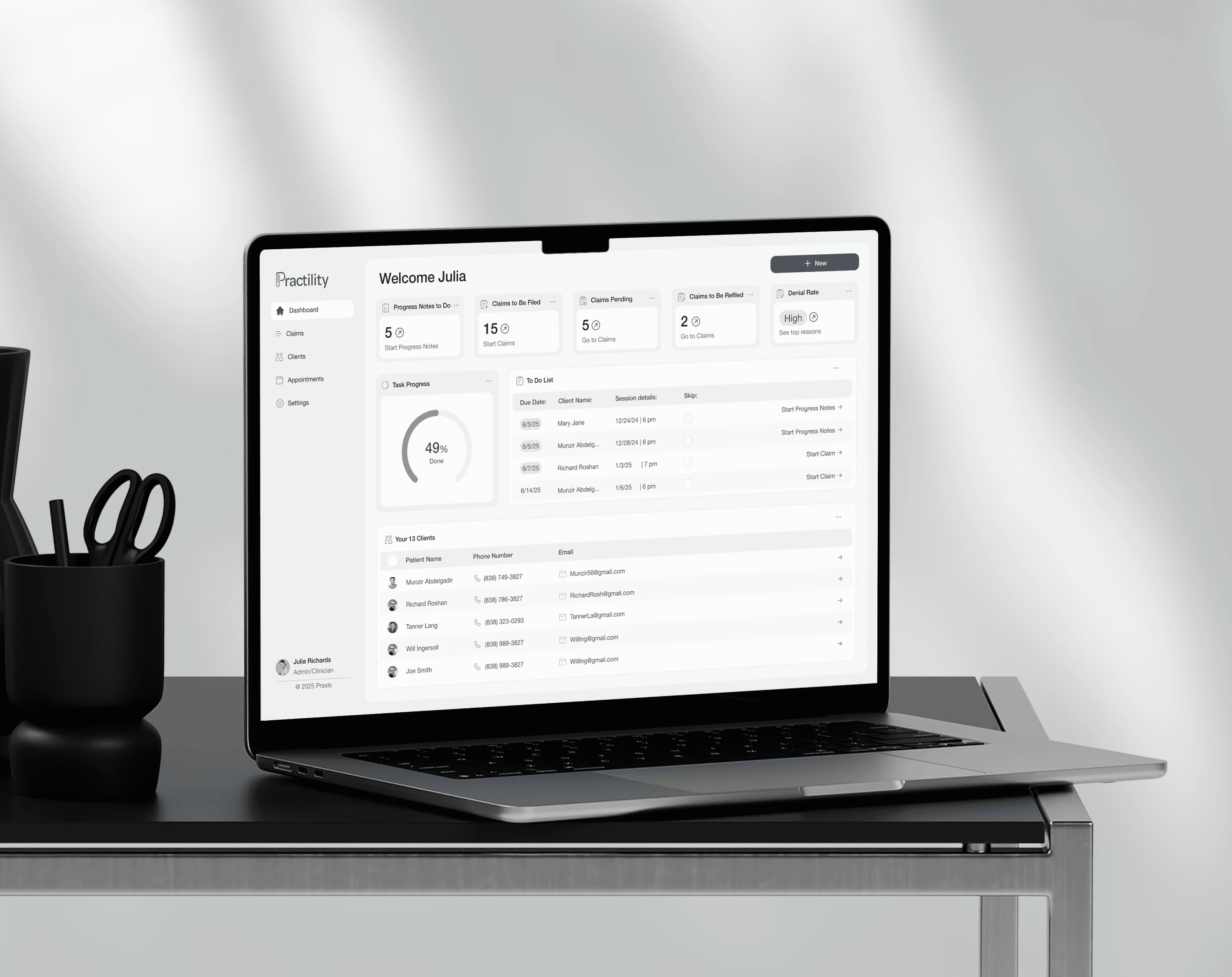
Here is me presenting Practility at Iltacon 2025
We even got our logo on "stress brains"!
✲ FINAL THOUGHTS
✲ FINAL THOUGHTS
On Complexity, Safety and Breaking the Rules.
On Complexity, Safety and Breaking the Rules.
The most complex UX challenges often only surface when interacting with a fully implemented system.
High-stakes systems often require breaking standard design patterns to prioritize safety and accuracy.
Partnering with researchers early ensures testing targets the most critical, ambiguous user flows.
The most complex UX challenges often only surface when interacting with a fully implemented system.
High-stakes systems often require breaking standard design patterns to prioritize safety and accuracy.
Partnering with researchers early ensures testing targets the most critical, ambiguous user flows.
The most complex UX challenges often only surface when interacting with a fully implemented system.
High-stakes systems often require breaking standard design patterns to prioritize safety and accuracy.
Partnering with researchers early ensures testing targets the most critical, ambiguous user flows.
Thanks for visiting! I go into more detail on my work over calls/interviews. Feel free to reach me here.
Thanks for visiting! I go into more detail on my work over calls/interviews. Feel free to reach me here.
But Wait, There's More!
But wait, there's more!
But wait, there's more!
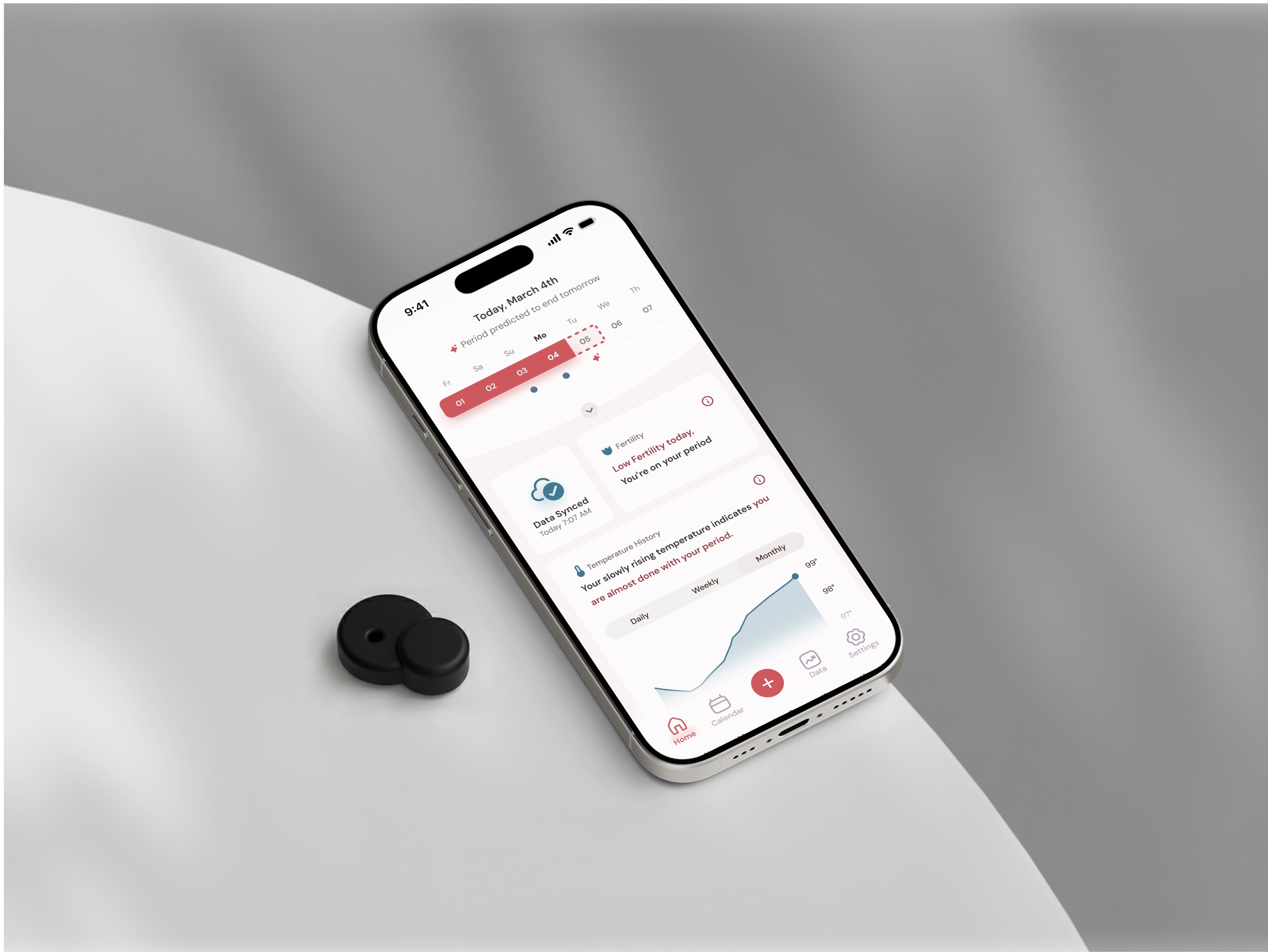
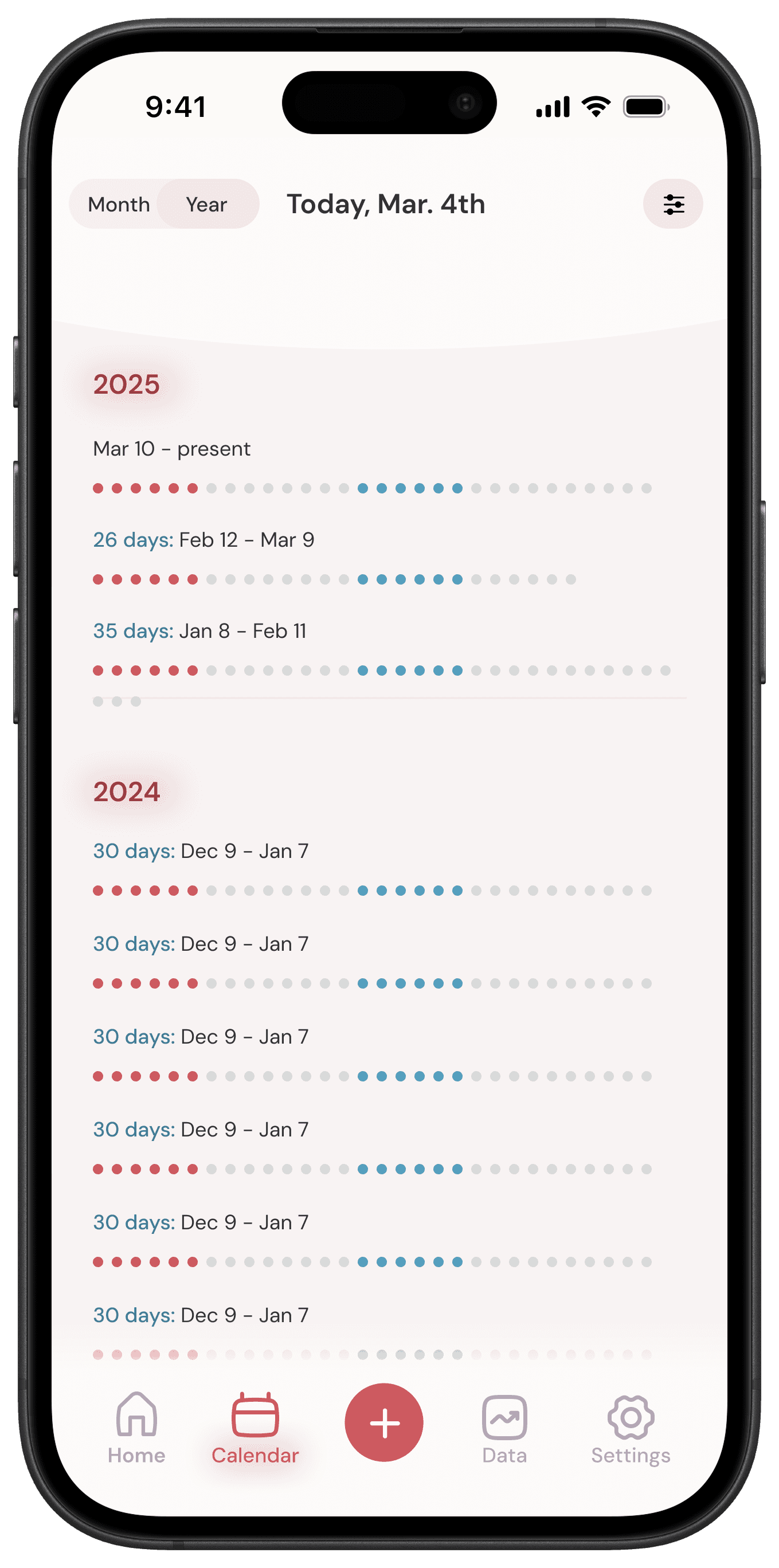
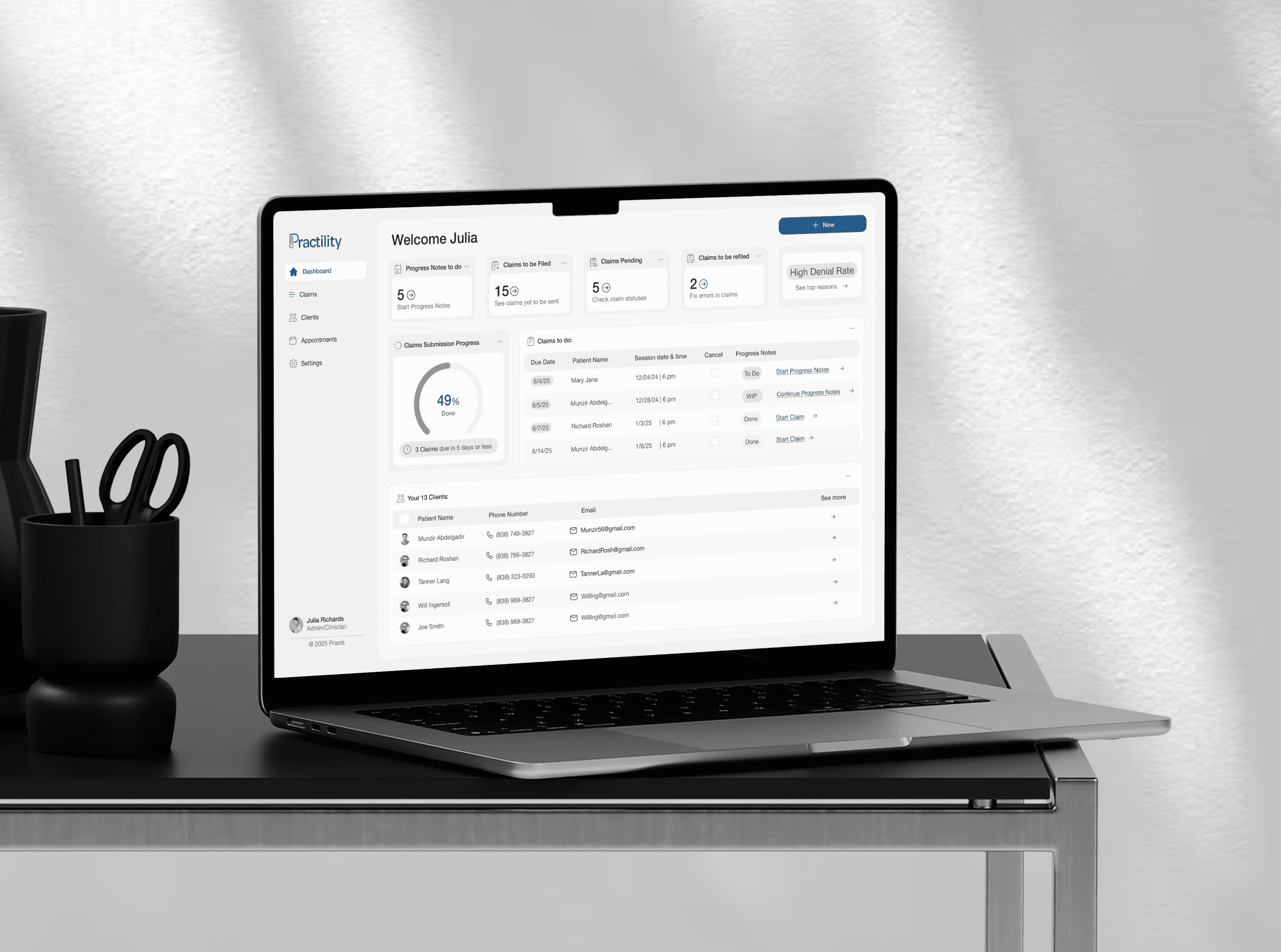
Final Design →
Final Design →
PREVIEW
